This article contains affiliate links. We may earn a commission if you buy through them.
You want café-style flavor at home without cluttering your counter or blowing your routine. With Syruvia coffee syrups, the real decision isn’t whether to add flavor—it’s which two or three bottles to start with and whether you prefer sugar-free or classic cane sugar. Make that call up front and you’ll cover weekday coffees, teas, or sparkling water and still leave room to experiment on weekends.
If you’d like to scan the full catalog before narrowing your list, visit Syruvia and note which flavors match how you drink now. Then come back to compare sugar-free versus cane sugar labels and pick a small starter set that makes sense for your routine.
What Syruvia offers for home coffee and mocktails
When you’re building a small home lineup, breadth matters because it lets you cover coffee, tea, and sparkling water without overbuying. Syruvia advertises a wide catalog spanning coffee and fruit flavors, with both cane-sugar and sugar-free bottles. That range makes it easier to select two or three versatile choices instead of a dozen niche picks. 250+ flavors advertised is the headline claim on the site; treat it as a menu to browse and a shortlist to make.
Another practical reason to consider Syruvia is how the company describes its product standards. Pages for individual syrups highlight that they’re made in the USA and labeled as OU kosher and gluten free. For many households, those are meaningful constraints that help a purchase fit more people at the table. Made in USA, kosher and gluten free is a simple checkpoint you can verify on the product page before you add to cart.
Finally, the site promotes bundle savings that increase as you add bottles. If you’re on the fence about a third flavor, a bundle can be a sensible way to try it without paying the full per-bottle price. Promotions and tiers can change, so confirm the current structure in your cart. The brand also displays a message about a free account for member pricing; if you plan to buy more than once, signing in can be worth the extra minute. To explore the full range—including the sugar-free category—start at Syruvia. Sugar-free options across flavors are clearly visible in the catalog.
Syruvia coffee syrups: sugar-free vs. cane sugar
Choosing between sugar-free and cane sugar is easier when you look at the label. A sugar-free example on the site lists 0 calories and 0 g sugars per 1 fl oz serving; the ingredient list includes non‑nutritive sweeteners such as sucralose and acesulfame potassium. By contrast, a cane-sugar example shows about 80 calories and 20 g sugars per 1 fl oz serving because the sweetening comes from pure cane sugar.
What does that mean for everyday drinks? If you’re watching sugars or calories, sugar-free can fit those goals with fewer nutrition tradeoffs, though some people perceive the taste of non‑nutritive sweeteners differently. If you prefer a classic profile, cane sugar offers familiar sweetness but adds calories and sugars. Start with the baseline the site suggests—one pump (about 1 tablespoon) per 8 oz—and adjust by taste. For milk-forward drinks, use a lighter hand; for sparkling water, go slightly heavier and re‑taste.
Two label facts clarify the difference at a glance: sugar-free bottles show Zero calories per 1 fl oz serving; cane-sugar bottles list About 20 g sugar per 1 fl oz. Those numbers don’t tell you which is “better,” but they do tell you which aligns with your routine. If you want to compare specific flavors, visit Syruvia, look up the two bottles side by side, and check each Nutrition Facts panel to confirm the serving numbers before you decide.
A curated trio to start: PACK OF THE WEEK
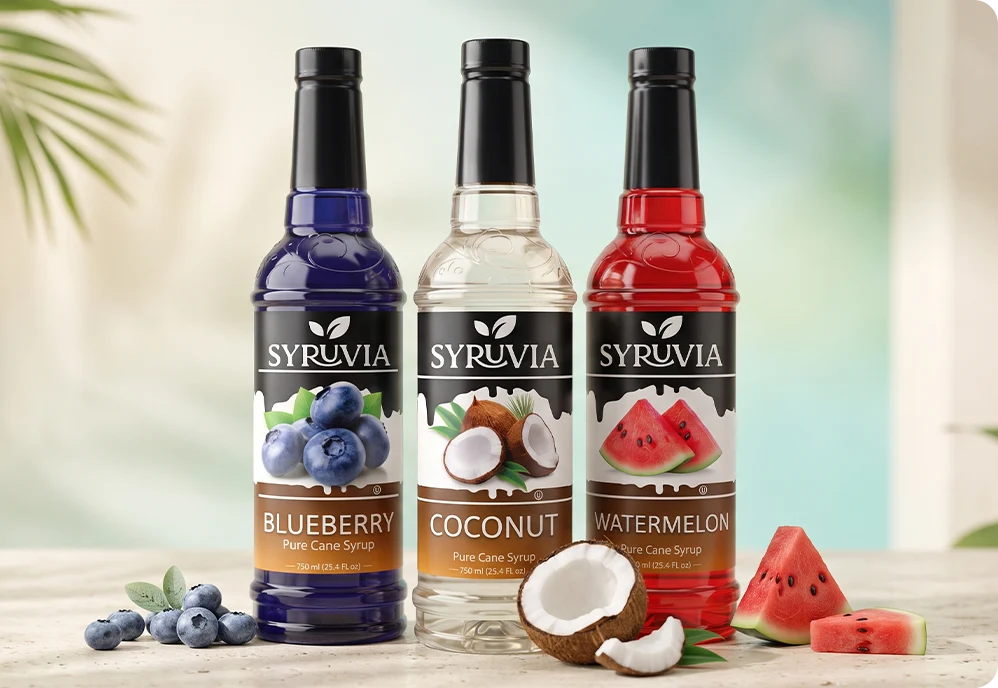
If you want a quick way to try multiple flavors without building a custom bundle, consider the current PACK OF THE WEEK. The Blue Tropic Splash Pack includes Blueberry, Coconut, and Watermelon syrups. The page describes these as bright, refreshing fruit profiles made with cane sugar. This kind of set is well-suited to iced tea and lemonade drinkers who also want a weekend mocktail option.
The pack page also notes the syrups dissolve in hot and cold beverages, which means you can move from hot tea to sparkling water without texture surprises. Use the pack in simple ways first: try Blueberry in iced tea, Coconut in an afternoon latte, and Watermelon in sparkling water with a squeeze of lemon. If those align with your daily drinks, a trio like this can cover your weekdays and still leave room for new ideas.
As with all multi-bottle offers, contents and price windows can change. If this tropical profile isn’t your style, it’s just as easy to build your own trio with one coffee‑friendly pick, one fruit-forward pick, and one flavor you’ve wanted to try for a while. If you lean toward sugar-free, start with their sugar-free category instead; if you’re a classic-sweetness household, a cane-sugar trio works. The point is to buy a small set you’ll actually finish. Blueberry, Coconut, Watermelon in one pack is a balanced way to sample. And yes—these syrups Mix into teas and mocktails as the pack page suggests, so you can test them beyond coffee.
Cookie butter for coffee: sugar-free or classic?
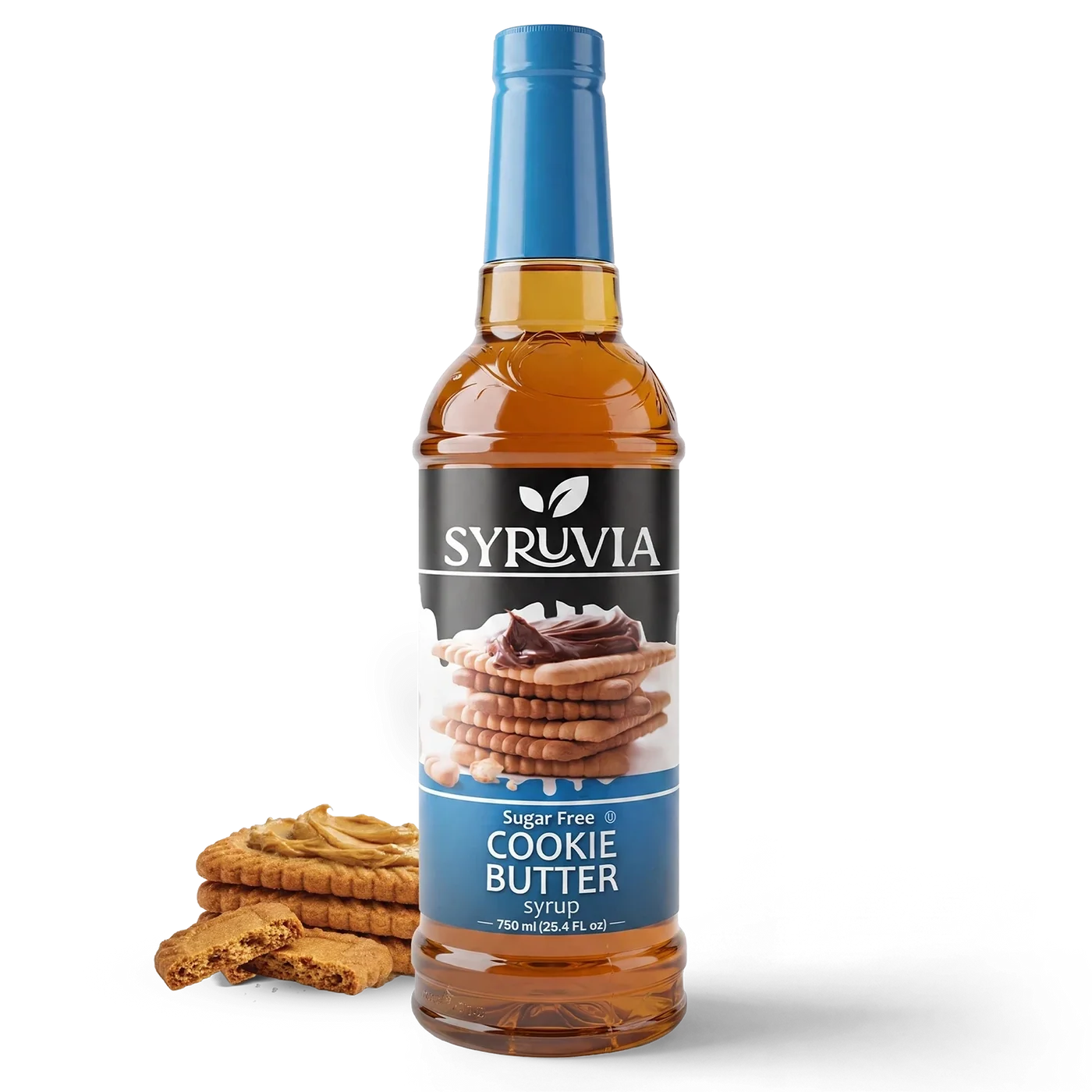
Cookie butter is a good test case because Syruvia offers it in both sugar-free and cane‑sugar versions, and the label differences are clear. Start by choosing the version that matches your nutrition goals, then pick a simple drink to try first. Sugar-free and classic versions exist, so you can compare on your terms.
What the sugar-free label means here
On the sugar-free product page, the nutrition panel shows 0 calories and 0 g sugars per 1 fl oz, and the ingredient list includes sucralose and acesulfame potassium. If you prefer a classic sweetening profile, the cane-sugar Cookie Butter lists about 80 calories and 20 g sugars per 1 fl oz, with pure cane sugar as the sweetener. Those label differences translate to taste expectations: the sugar-free bottle aims to provide flavor without sugars, while the cane-sugar bottle delivers familiar sweetness along with calories.
If you’re unsure how a sugar-free bottle will taste to you, use the site’s “one pump per 8 oz” baseline for an initial pour. Taste first before you add more—especially in milk-forward drinks where sweetness can build fast. If you decide you prefer the cane-sugar version, you can keep the same measure and adjust over time. To compare labels, visit Syruvia, look up Sugar Free Cookie Butter Coffee Syrup and Cookie Butter Coffee Syrup, then check the Nutrition Facts for each.
A quick iced latte example
Here’s a hypothetical iced latte plan you can adapt. For an 8 oz iced latte, start with Start with one pump per 8 oz—about 1 tablespoon—of your chosen Cookie Butter syrup in the cup. Add a shot of espresso (or 4 oz strong cold brew), then pour in 8 oz of milk and ice. Taste. If you want more cookie-spice presence, add a half‑pump and taste again. This approach keeps the sweetness under control and helps you decide whether sugar-free or cane sugar fits your palate. If you enjoy sparkling drinks, the sugar-free bottle also pairs with sparkling water and a squeeze of lemon for a quick “coffee soda” variation the site lists among its quick sips.
Once you know your preference, pick two additional flavors that complement Cookie Butter—one coffee‑friendly (like coconut, vanilla, or hazelnut) and one fruit-forward for teas or seltzers. That three-bottle set can carry your routine for a month and tell you exactly what to reorder next.
A lighter tropical pick: Sugar-Free Coconut Syrup
If you want something lighter than a dessert flavor but still versatile, visit Syruvia and look up Sugar-Free Coconut Syrup. The page describes creamy, tropical notes and shows 0 calories and 0 g sugars per 1 fl oz. That combination makes it a flexible pick for hot or iced coffee, and an easy add to sparkling water when you want a clean, not-too-sweet sip. For a measured start, use the same one‑pump baseline, taste, and adjust.
Because coconut bridges coffee and non‑coffee drinks, it’s a solid second bottle after your first dessert-forward choice. The site’s quick sips include iced coconut lattes, a simple coconut cold brew, and a sparkling coconut soda. Try those as springboards rather than scripts: keep the measure modest, and use milk fat or a dairy‑free option you already drink every day. If you’re building a three‑bottle bundle, Coconut plus Cookie Butter plus one fruit syrup gives you range without clutter. Zero-calorie coconut flavor option means you can add tropical aroma without adding sugars. And because it dissolves quickly, you can Use in coffee or sparkling water with minimal stirring.
How to shop Syruvia efficiently
Once you know which flavors you want, decide how to buy them. The site’s bundle builder shows percent savings that increase as you add bottles, so a three‑bottle set can make sense if you’re already eyeing a third flavor. Check the current tiers on a product page and compare the final total in your cart. Bundle discounts apply as you add bottles, but the tiers can vary over time.
If you plan to reorder, look for the on‑site message about member pricing and sign in to activate it. The account is shown as free to create, and the price messaging appears on product pages. When you’re comparison‑shopping, make sure you’re logged in so you can see all the available pricing before you check out. VIP pricing requires a free account, according to the site’s prompts.
Set shipping and returns expectations up front. The FAQ outlines a typical fulfillment window from a New Jersey warehouse, a flat shipping fee with a free‑shipping threshold, and a 30‑day policy offering refund, swap, or store credit if a bottle isn’t for you. Because thresholds and fees can vary by offer, Confirm shipping threshold in cart before you finalize. If you’re building a bundle, add your third bottle first, then revisit totals to see whether you cross the free‑shipping line. For after‑purchase flexibility, the site states a 30-day refund or swap policy stated, which is useful if you’re trying a new profile.
Ready to assemble your order? Start at the flavor category you’ll use most and build from there at Syruvia. If you prefer a preselected set to begin with, the current PACK OF THE WEEK is a simple entry point; otherwise, mix one coffee‑friendly syrup, one fruit syrup, and one experiment.
Quick answers: how much to use and what to mix
How much should you use for the first pour? The site’s baseline is Start with one tablespoon per 8 oz drink, then adjust by taste. That’s a good way to avoid over‑sweetening, especially with milk. For sparkling water, you might prefer a slightly heavier hand because dilution is higher. If you’re splitting a bottle among family members, consider labeling a pump measure so everyone starts consistently.
As for what to mix, think beyond coffee: these syrups are described for use in iced tea, matcha, sparkling water, and simple mocktails, plus non‑drink uses like pancakes, oatmeal, and yogurt. Storage guidance on product pages covers shelf life and refrigeration after opening. If a flavor isn’t a fit, use that 30‑day policy noted in the FAQ to request a refund, swap, or store credit.
One last note on taste: sugar-free sweeteners can land differently for different palates. If you’re unsure, choose a sugar-free bottle in a flavor profile you already love—like coconut—and compare against its cane-sugar counterpart later. To explore options and build a sensible trio, browse Syruvia, add two certain picks, and leave your third slot for a controlled experiment.